
What Is Happening with Climate Change in 2025?
by Climate Analysis Desk
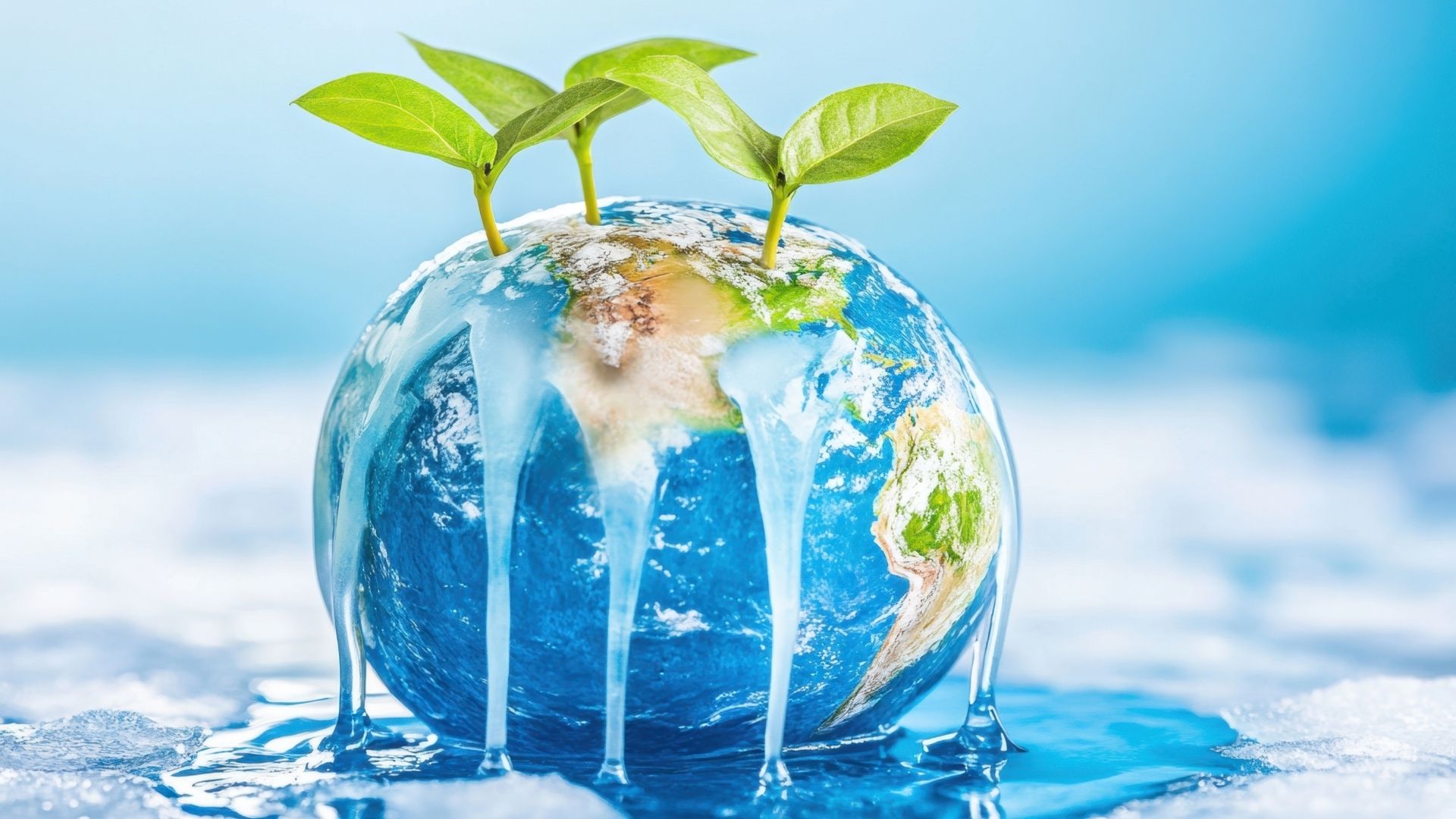
A Reality Check for Policymakers, Businesses, and Citizens
As we enter 2026, the global climate system is showing multiple signs of distress. Accelerating greenhouse gas concentrations, extreme climate events across continents, and the weakening of natural carbon sinks are reshaping scientific understanding and climate policy priorities worldwide.
While global agreements continue to evolve, the urgency now lies in converting commitments into rapid, measurable action. This chapter synthesizes key climate signals, policy developments, scientific findings, and societal responses shaping the climate landscape in 2025.
Climate Signals in 2024: What the Data Shows
2024 ended as the hottest year ever recorded, and early 2025 trends indicate a continuation of this trajectory. Driven by El Niño and accumulated anthropogenic warming, nearly all major climate indicators—including ocean heat content, surface temperatures, and atmospheric CO₂—have reached new historical highs.
Key sources include IPCC AR6, the WMO State of the Global Climate reports, and global temperature datasets from NASA and NOAA.
What Is Happening with the Carbon Cycle?
Recent assessments from 2023–2024 indicate that forests, soils, and ecosystems—which historically absorbed around 30% of human CO₂ emissions—are losing resilience under rising temperatures and extreme events.
Key findings include a sharp decline in land carbon sink performance during 2024, weakening carbon uptake in both tropical and northern ecosystems, and massive emissions from Canadian boreal wildfires in 2023 comparable to the EU’s annual fossil fuel emissions.
Permafrost thaw is accelerating methane and CO₂ release, pushing Arctic regions closer to becoming net carbon sources rather than sinks.
These conclusions are supported by the Global Carbon Project, Friedlingstein et al. (2025), Li et al. (2025), and the WMO Global Greenhouse Gas Bulletin.
Global Climate Policies Active in 2025
COP29, hosted in Azerbaijan, continues to advance global climate governance through discussions on the global stocktake, climate finance, loss and damage mechanisms, and international carbon markets.
The process builds on the COP28 UAE Consensus and UNFCCC official frameworks.
The Paris Agreement remains the foundation of international climate action. Nearly all countries have committed to setting national emission reduction targets, reporting progress transparently, and contributing to the goal of limiting global warming to 1.5°C.
More than 140 countries and thousands of corporations have pledged net-zero emissions by mid-century. However, many commitments lack detailed implementation roadmaps, interim milestones, and enforcement mechanisms.
These gaps are highlighted in the UNEP Emissions Gap Report and the Net-Zero Tracker database.
What Actions Can Be Taken in 2026?
Climate-positive strategies go beyond offsetting emissions by prioritizing direct emission reductions, renewable energy adoption, low-carbon supply chains, and circular manufacturing systems.
Governments must expand adaptation strategies such as wildfire management, permafrost monitoring, drought-resilient agriculture, and marine ecosystem protection.
Key actions include decentralized renewable energy deployment, green urban planning, incentives for electric mobility and public transport, and sector-wide decarbonization mandates.
Individual choices continue to play a role through low-carbon mobility, plant-based diets, energy-efficient housing, waste reduction, recycling, and reduced fast-fashion consumption.
Conclusion
2025 marks a decisive moment in the global climate timeline. Scientific warnings, geopolitical shifts, and societal expectations are converging as natural carbon sinks weaken and emissions remain high.
Whether this decade becomes irreversible or transformational depends on immediate, large-scale action across climate policy, corporate responsibility, and individual behavior.
